

NEURODIVERSITY MENTORING
Neurodiversity is a natural part of today’s workplaces and a valuable asset. Employees with ADHD, autism, dyslexia, and other cognitive differences often bring creativity, strong focus and innovative thinking. Yet many still face barriers such as communication challenges, unspoken expectations or a lack of tailored support.
A structured mentoring programme helps break down these barriers. It increases wellbeing, retention and career development, while strengthening your organisational culture.
Whether you’re looking to adapt an existing programme or design one from scratch, we’ll help you create a mentoring experience that meets real needs and makes a real difference.

Want to Learn More?
Get in touch to explore how a mentoring programme can support neurodiversity in your organisation. We offer guidance, tools and tailored solutions to match your needs.
Why Mentoring Works
Mentoring is a powerful lever for inclusion which benefits both the neurodivergent staff and the organisation. Mentoring offers a practical and human way to support neurodivergent individuals while building a stronger, more inclusive culture. It can play a key role in creating more inclusive, supportive, and high-performing environments for neurodivergent employees. With the right mentoring approach, organisations can unlock individual strengths, foster belonging, and reduce barriers to development.
For Neurodivergent Employees
- Increased confident and self-advocacy - Mentoring helps neurodivergent individuals better understand their strengths, communicate their needs, and build self-advocacy skills in navigating workplace dynamics.
- Career development and progression - A mentor provides guidance on career paths, opportunities, and strategies to achieve professional goals — helping address potential barriers to advancement.
- Social connection and reduced isolation - Mentoring offers a supportive relationship that can reduce feelings of isolation, foster belonging, and provide a safe space to share experiences.
- Strategies for navigating workplace challenges - Mentors can share tools and approaches for managing sensory sensitivities, communication differences, executive functioning demands, or other neurodivergence-related challenges.
For organisations
- Improved retention of neurodivergent talent - Providing mentoring support can reduce turnover by making neurodivergent employees feel valued, supported, and better equipped to succeed.
- Enhanced innovation and diversity of thought - Supporting neurodivergent employees through mentoring helps unlock their unique perspectives, contributing to more creative problem-solving and innovation.
- A more inclusive culture - Mentoring programmes signal organisational commitment to inclusion, helping shift culture towards greater acceptance of neurodiversity and reducing stigma.
- Improved manager and colleague understanding - Especially through reciprocal mentoring (where neurodivergent employees and mentors share their strengths and challenges), the programme can increase awareness, empathy, and inclusive practices across the workforce.
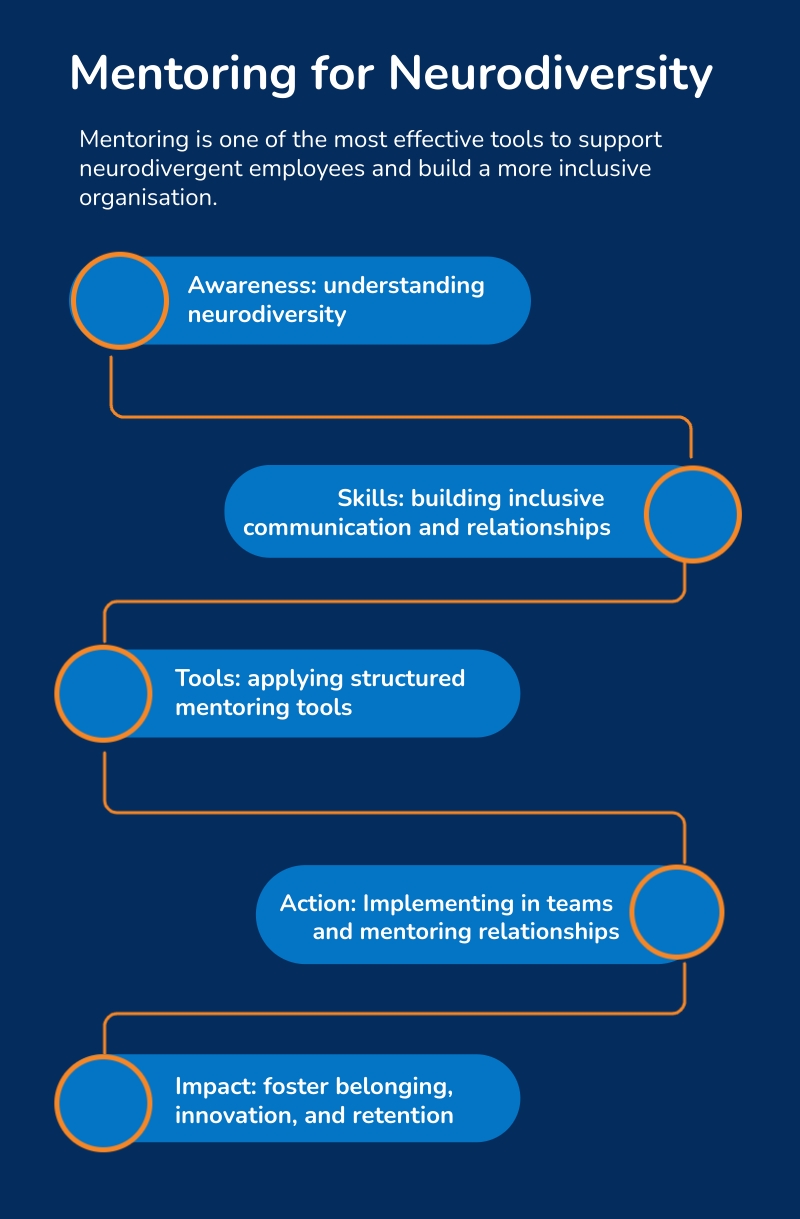
Our Approach: Mentoring for Neurodiversity
Mentoring for Neurodiversity helps leaders, mentors, and HR professionals build inclusive environments where neurodivergent talent can thrive. Through tailored mentoring tools, practical strategies, and actionable frameworks, participants gain the confidence and skills to support neurodivergent colleagues while strengthening organisational inclusion.
Why choose this approach?
- Build awareness and practical skills to support neurodivergent employees
- Strengthen inclusive communication and mentoring relationships
- Apply mentoring tools that foster trust, psychological safety, and growth
- Champion neurodiversity as part of your DEI and organisational culture strategy
Supporting neurodiversity in the workplace offers a range of tangible benefits. Organisations with neurodivergent employees often report enhanced creativity and innovation, as unique perspectives contribute to team dynamics and spark groundbreaking ideas and solutions. This diversity of thought fosters both creativity and productivity within teams. In addition, fostering inclusion and providing appropriate accommodations can lead to a stronger organisational culture and environment.
Three ways to implement mentoring for neurodiversity
No two programmes are designed the same way
Every organisation is different, so we offer three flexible programme models.
They must be adapted to the specific purpose, context, and development needs. Below you see the three different models for addressing neurodiversity. Each model has a different focus, specific benefits and key elements in matching and training.
Model 1:
Mentoring for Neurodivergent Employees
A practical support programme where neurodivergent employees are paired wih trained mentors (neurodivergent or neurotypical).
The focus is on:
- Building confidence
- Communicating needs
- Developing career skills
- Increasing belonging and psychological safety
Outcome: Higher job satisfaction and reduced masking and burnout.
Model 2:
Mentoring for Neurodivergent Leaders
Designed specifically for leaders who are neurodivergent.
This programme supports:
- Authentic leadership
- Energy and stress management
- Communication without masking
- Effective decision-making and self-leadership
Outcome: Stronger leadership performance without compromising identity.
Model 3:
Reverse/Reciprocal Mentoring
A two-way mentoring approach where neurodivergent employees and leaders learn from each other.
This creates:
- Stronger understanding of neurodiversity
- More inclusive workplace practices
- Long-term cultural change
Outcome: Better collaboration and an organisation where everyone can contribute.
